
Part 1. Dated Prices
- 1. The Grade Is the Asset
- 2. When Did It Sell?
- 3. Prices Move Both Ways
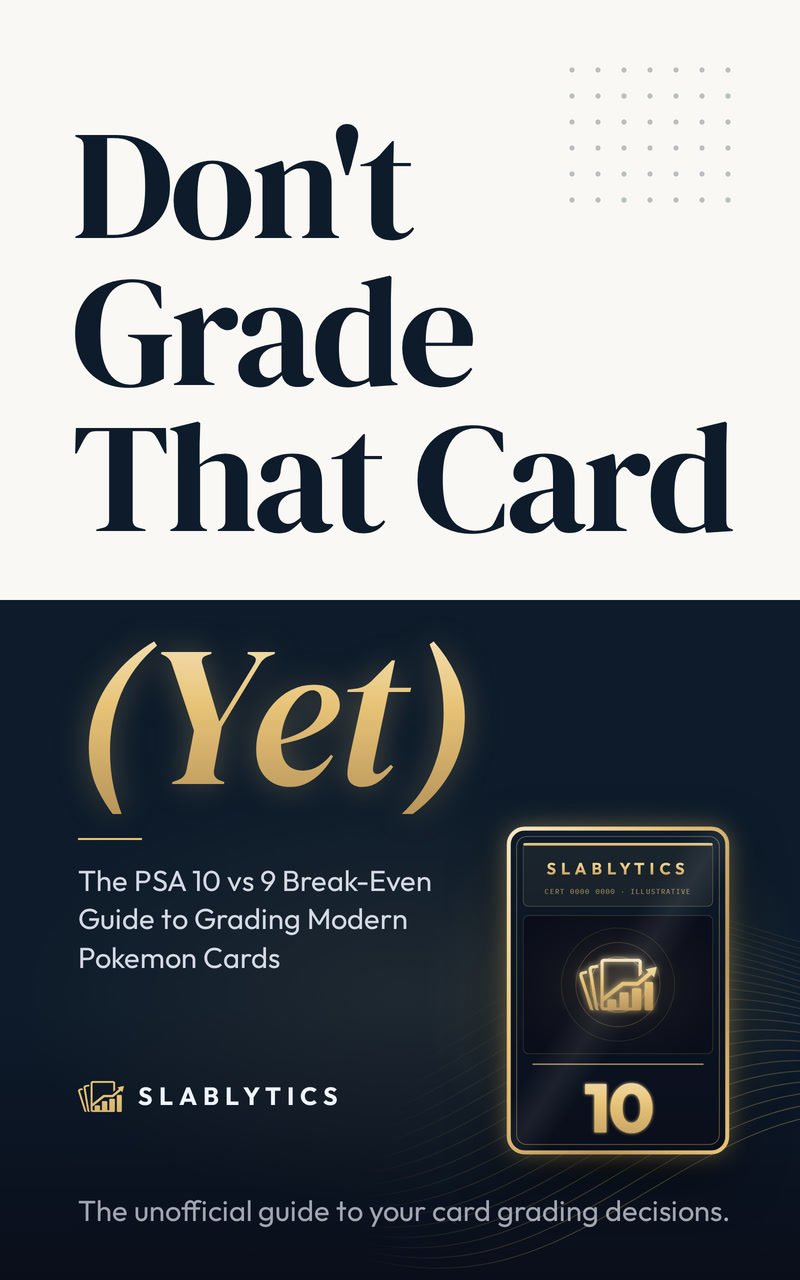
The PSA 10 vs 9 Break-Even Guide to Grading Modern Pokémon Cards
+$101.51
Charizard ex 006/165 from Scarlet & Violet 151 sold for a median of $29.99 as a PSA 9 and $131.50 as a PSA 10.
Same card, same number, and the one point on the label between them was worth $101.51. This short, visual guide teaches you to price that gap before you pay to grade a modern Pokémon card.
Real sales: eBay sold, 30 days to Nov 4 2026, 5 PSA 9 sales and 5 PSA 10 sales (median prices).
Don't Grade That Card (Yet) is a $5 Kindle eBook by Slablytics. It shows collectors how to compare raw, PSA 9 and PSA 10 sold prices, add up the full cost of grading, and work out the PSA 10 chance a modern Pokémon card needs before it is worth sending in.
Example from Chapter 5: a near mint raw card worth $250. A PSA 9 copy sells for $230 and a PSA 10 for $750.
You send it in and pay $60 to PSA at its Standard tier, plus $15 for shipping both ways. It comes back a PSA 9. Against selling the card raw on day one, you end up $95 behind. The $750 PSA 10 is why the submission looked tempting, and nobody looked up the 9 first. Chapter 5 calls this the 9 trap, and Chapter 6 shows the math that tells you, before you pay, how often the 10 has to come back for the submission to pay off.
Example numbers are round figures made up to teach the math and never belong to a named card.
Real sales carry their source, date and count. Example numbers are tagged Example. Illustrations show a shape, like a grade ladder, with no sales plotted on it. Graded prices fall as well as rise, so the book shows you how to check recent sales for your own card.
Each chapter ends with a SlabKey, a link to the free Slablytics tool or guide that goes with that step.
Closing section: Your One-Minute Slab Check
All free on slablytics.com, with Slablytics prices for graded Pokémon cards.
It is a short, visual Kindle eBook by Slablytics about one decision: whether to pay to grade a modern Pokémon card. It teaches you to compare raw, PSA 9 and PSA 10 sold prices and work out the break-even before you send a card in.
Collectors deciding whether to send a modern Pokémon card to a grader, and anyone buying graded cards at shows or online.
The Kindle eBook is $5 on Amazon. Get it on Amazon.
The book stands on its own. Each chapter's SlabKey links to the matching free Slablytics tool or guide, so you can run the same math on your own card if you want to.
Every example in the book uses modern Pokémon cards, and the real sales it quotes are dated, sourced and counted. The same break-even method works for other trading card games and sports cards.
No. The book is an independent, unofficial guide for education and entertainment, and it is not financial advice. Slablytics is not affiliated with or endorsed by PSA, The Pokémon Company, Nintendo, Creatures, Game Freak or eBay.